

Core Breakthrough: Thin-Type PVC Gravure Printing Machine Debuts, Conquering Ultra-Thin Film Printing Deformation Woes
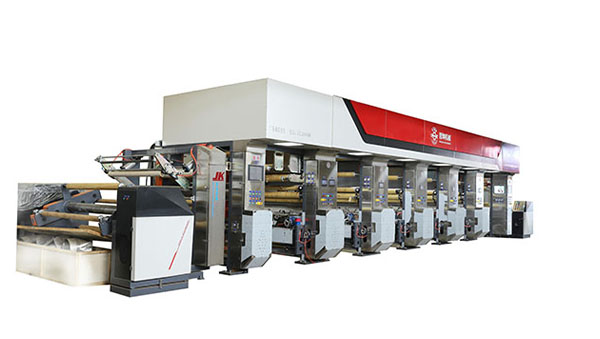
Recently, a thin-type PVC Gravure Printing Machine tailored for ultra-thin PVC film printing has been officially launched in the global packaging printing industry, marking a major technological breakthrough in solving the long-standing stretching deformation problem of thin material printing. This specialized PVC Gravure Printing Machine focuses on the printing needs of ultra-thin PVC films (thickness 8μm-30μm), and through precision tension control and structural optimization, realizes high-quality printing of thin films without stretching or deformation. As a core equipment in the ultra-thin packaging material processing chain, the launch of this thin-type PVC Gravure Printing Machine has effectively released the market potential of ultra-thin PVC film products, attracting widespread attention from packaging enterprises engaged in food labels, electronic packaging and other high-end fields.
Industry insiders pointed out that with the miniaturization and high-endization of terminal products, the demand for ultra-thin PVC films in the packaging industry has grown at an annual rate of over 22%. However, the printing process of such thin films has long been constrained by deformation problems, and traditional equipment cannot meet the processing requirements. The thin-type PVC Gravure Printing Machine just fills this market gap. It is estimated that the market share of this specialized PVC Gravure Printing Machine will exceed 60% in the ultra-thin PVC film printing field within three years, helping related enterprises reduce material waste costs by more than 35%.
Industry Pain Point: Traditional PVC Gravure Printing Machine Fails to Adapt, Ultra-Thin Film Printing Faces Bottlenecks
Ultra-thin PVC films, with their excellent transparency, light weight and cost-effectiveness, have become the preferred material for high-end packaging such as snack labels, electronic component packaging and cosmetic inner liners. However, due to their extremely thin thickness and low tensile strength, ultra-thin PVC films are extremely sensitive to tension during the printing process. The PVC Gravure Printing Machine, as the core equipment in the printing link, its tension control accuracy directly determines the yield and quality of ultra-thin PVC film products.
For a long time, traditional PVC Gravure Printing Machine has been plagued by backward tension control technology, which has become an insurmountable pain point for ultra-thin PVC film printing. Most traditional PVC Gravure Printing Machine adopt simple open-loop tension control systems, which cannot dynamically adjust the tension according to the real-time changes of the ultra-thin film during high-speed printing. Excessive tension often leads to irreversible stretching deformation, resulting in narrowed film width and distorted patterns; insufficient or unstable tension, on the other hand, causes wrinkles and uneven feeding. Relevant data show that due to the tension control defects of traditional PVC Gravure Printing Machine, the waste rate of ultra-thin PVC film printing is as high as 18%-25%, and about 45% of product quality complaints are related to stretching deformation. With the increasingly fierce market competition and the rising cost of raw materials, the low yield caused by traditional PVC Gravure Printing Machine has seriously eroded the profit space of packaging enterprises.
Technology Decoding: Precision Innovation Empowers PVC Gravure Printing Machine with Ultra-Thin Film Adaptability
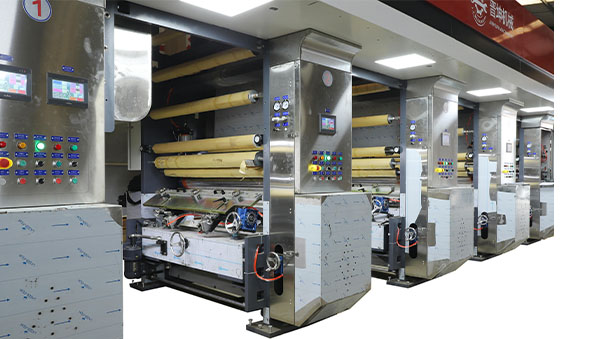
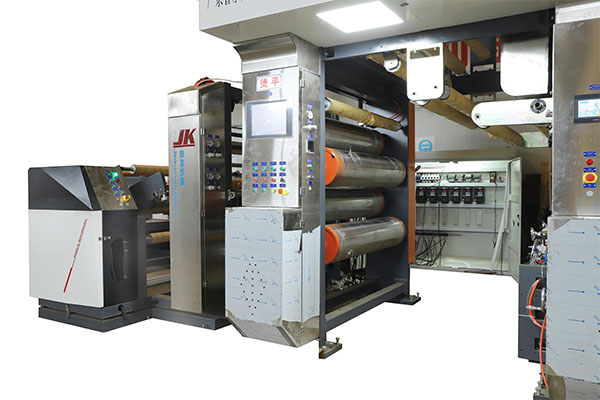
The thin-type PVC Gravure Printing Machine achieves a qualitative leap in ultra-thin film printing through a series of core technological innovations, breaking the technical bottleneck of stretching deformation. Different from the traditional equipment structure, this thin-type PVC Gravure Printing Machine adopts a four-stage closed-loop tension control system, which realizes full-process tension monitoring and precise control covering unwinding, printing, drying and winding links.
In the unwinding link, the PVC Gravure Printing Machine is equipped with high-precision tension sensors and a dynamic diameter compensation algorithm, which can automatically calculate the real-time diameter of the film roll and adjust the braking torque in real time, ensuring stable unwinding tension. In the printing link, the PVC Gravure Printing Machine uses servo motors with a response speed of 0.01 seconds to drive each printing unit independently, and cooperates with the floating roller PID adjustment mechanism to accurately control the tension between color groups within ±0.2N, avoiding tension fluctuations during multi-color overprinting. The drying link of the PVC Gravure Printing Machine adopts a low-temperature hot air circulation system, which reduces the drying temperature by 15%-20% compared with traditional equipment, avoiding film deformation caused by high-temperature baking. In the winding link, the PVC Gravure Printing Machine applies tension taper control technology, which automatically reduces tension as the roll diameter increases, preventing internal stress accumulation and stretching deformation.
In addition, the PVC Gravure Printing Machine is equipped with an intelligent control system with a built-in parameter database for various ultra-thin PVC film specifications. Operators only need to select the corresponding film type and thickness on the touch screen, and the system can automatically call the optimal tension, speed and temperature parameters, greatly reducing the difficulty of operation. The equipment also has an automatic deviation correction function, which ensures stable feeding of ultra-thin films and avoids edge stretching caused by deviation.
Application Value: Thin-Type PVC Gravure Printing Machine Helps Enterprises Reduce Costs and Increase Efficiency Significantly
The practical application effect of the thin-type PVC Gravure Printing Machine has been fully verified in many packaging enterprises. A leading enterprise specializing in food label printing reported that after replacing the traditional PVC Gravure Printing Machine with this thin-type equipment, the waste rate of 15μm ultra-thin PVC film printing dropped from 22% to 2.8%, and the product qualification rate increased to 99.6%. The stable printing quality of the PVC Gravure Printing Machine ensures the overprint accuracy of the labels, with the overprint error controlled within ±0.1mm, winning high recognition from downstream brand customers. The enterprise's annual cost savings from reducing material waste exceed 1.3 million US dollars.
Another electronic packaging enterprise focusing on ultra-thin PVC film processing said that the PVC Gravure Printing Machine can stably print 8μm ultra-thin PVC films at a speed of 150m/min, and the production efficiency is increased by 45% compared with the traditional PVC Gravure Printing Machine. The precise tension control of the equipment reduces the need for 3 professional adjustment personnel, saving more than 120,000 US dollars in annual labor costs. Industry insiders calculated that for a packaging enterprise with an annual output of 6 million square meters of ultra-thin PVC film products, the investment in thin-type PVC Gravure Printing Machine can be fully recovered within 1 year through cost savings from reduced waste and increased production efficiency.
Industry Outlook
Looking forward to the future, with the continuous upgrading of the global packaging industry towards high efficiency, low cost and green environmental protection, the demand for intelligent and multi-functional laminating machine will continue to rise. The laminating machine industry will further integrate advanced technologies such as the Internet of Things and digital twins, realizing functions such as real-time monitoring of equipment operating status, remote fault diagnosis and automatic optimization of process parameters. At the same time, driven by the demand for new packaging materials such as bio-based composites and high-performance functional films, the multi-functional laminating machine will develop towards higher precision and stronger compatibility. Industry experts pointed out that the development of multi-functional laminating machine has broken the technical monopoly of foreign high-end laminating machine to a certain extent and promoted the localization substitution of packaging equipment. In the future, domestic laminating machine enterprises will continue to increase R&D investment, improve the performance and cost performance of multi-functional laminating machine, and help the global packaging industry achieve high-quality development. With the continuous expansion of application scenarios, the multi-functional laminating machine will play a more important role in the fields of new energy packaging, medical packaging and other emerging fields.