
In the high-end PVC decorative film industry, pattern clarity, texture fidelity, and composite stability are core technical indicators that determine product grade and market competitiveness. Traditional PVC laminating machines suffer from tension fluctuations, misalignment, and uneven pressure, leading to common defects such as pattern blurring, texture distortion, color deviation, and surface wrinkles. This has long been a critical industry pain point restricting the development of high-value-added decorative films. The newly developed PVC laminating machine for decorative film, with its precision servo control system, constant-pressure composite mechanism, and synchronous linkage technology, achieves clear pattern reproduction with high fidelity and zero distortion. When seamlessly integrated with the Gravure And Emboss integrated system, Brushing Machine, and Coating Machine, it forms a fully automated, high-precision production line. This paper systematically analyzes the technical principles, performance parameters, synergistic mechanisms, and application effects of the equipment, supported by actual production data and enterprise application cases, verifying its significant advantages in solving industry pain points and enhancing product quality.
1. Industry Pain Points and Technical Background of PVC Decorative Film Production
PVC decorative film is widely used in furniture, interior decoration, automotive interiors, and architectural panels due to its rich patterns, excellent weather resistance, and cost-effectiveness. The laminating process is the key link that determines pattern integrity and surface quality, directly affecting the visual effect and service life of the final product. However, traditional production lines face prominent technical bottlenecks:
1.1 Core Industry Pain Points (With Statistical Data)
Pattern Blurring and Distortion: Tension instability and asynchronous speed in traditional laminating machines cause pattern stretching, misalignment, and blurring. The pattern reproduction accuracy is only 82%–87%, with a texture distortion rate of 6.5%–11.3% (China Plastics Processing Industry Association, 2025).
Poor Texture Synchronization: The mismatch between printed patterns and embossed textures leads to a "pattern-texture deviation" phenomenon, with a synchronization error of 0.15–0.3 mm, failing to meet the high-fidelity requirements of high-end wood grain, stone grain, and 3D relief products.
Surface Defects: Uneven pressure and tension fluctuations cause wrinkles, bubbles, and orange peel effects. The defect rate of decorative film surfaces reaches 9.8%–14.5%, resulting in a material waste rate of 8.5%–12.3%.
Low Production Efficiency: Frequent debugging and rework reduce the comprehensive production efficiency to 65%–72%. The manual adjustment of process parameters leads to a long product changeover time (45–60 minutes), failing to meet the demands of multi-variety, small-batch customized production.
Weak Line Synergy: Traditional equipment cannot achieve precise linkage with pre-treatment, printing, embossing, and post-coating processes, resulting in discontinuous production, quality fluctuations, and increased labor costs.
1.2 Market Demand and Technical Upgrade Trends
With consumption upgrading, the market demand for high-end PVC decorative film is growing at an annual rate of 12.5% (2024–2026). High-fidelity pattern reproduction, clear texture restoration, and stable quality have become necessary conditions for entering the high-end market. The PVC laminating machine for decorative film, with clear pattern reproduction as its core advantage, integrates precision control and multi-machine linkage technology, effectively solving the above pain points and becoming a key equipment for industry technological upgrading.
2. Technical Principles and Core Advantages of PVC Laminating Machine for Clear Pattern Reproduction
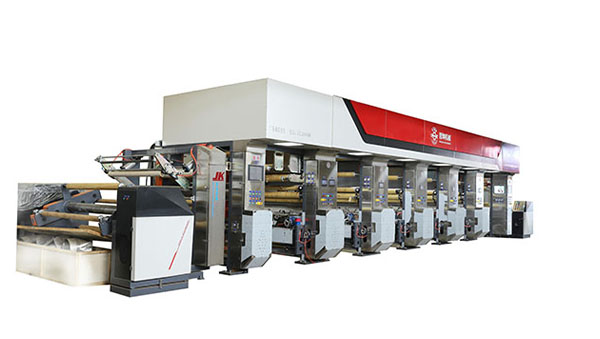
The PVC laminating machine for decorative film is designed around the core goal of clear pattern reproduction, adopting a precision closed-loop control system, constant-tension transmission, and synchronous pressure composite technology to ensure pattern fidelity and surface flatness.
2.1 Core Technical Principles
High-Precision Closed-Loop Tension Control: Equipped with digital tension sensors and servo drive systems, it achieves real-time dynamic adjustment of tension (control accuracy ±0.3% FS, response time ≤8 ms), maintaining constant tension during high-speed operation and eliminating pattern distortion caused by tension changes.
Servo-Driven Synchronous Control System: The main motor and feeding/rewinding motors adopt dual servo synchronous control, with a speed synchronization error ≤0.05 m/min. It ensures absolute synchronization with the Gravure And Emboss system, realizing zero-deviation registration of printed patterns and embossed textures.
Constant-Pressure Precision Composite Mechanism: The composite pressure is controlled at 0.3–0.8 MPa (accuracy ±0.02 MPa) through a hydraulic servo system. The precision composite roller (surface roughness Ra ≤0.02 μm, coaxiality ≤0.003 mm) ensures uniform pressure distribution, avoiding pattern blurring and bubbles caused by uneven pressure.
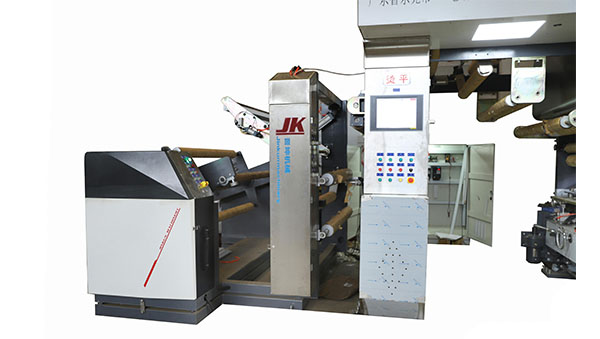
Anti-Deflection and Anti-Wrinkle Guide System: The precision guide roller and automatic deviation correction system (correction accuracy ±0.1 mm) effectively suppress wrinkles and ensure stable film operation, maintaining pattern integrity.
3. Synergistic Mechanism of Integrated Production Line with Supporting Equipment
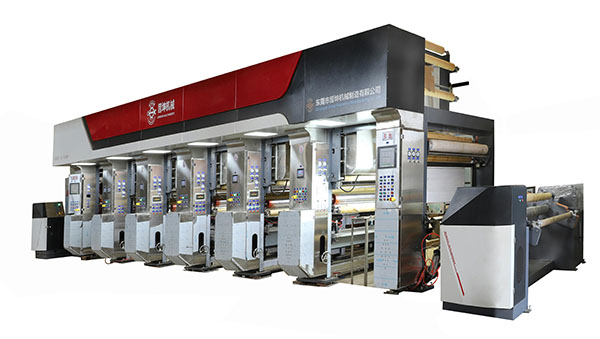
The PVC laminating machine achieves optimal performance through precise linkage with Brushing Machine, Gravure And Emboss integrated system, and Coating Machine, forming a full-process integrated production line from substrate pre-treatment to finished product coating.
3.1 Pre-Treatment Synergy: Brushing Machine—Foundation for Pattern Clarity
The Brushing Machine serves as the pre-treatment unit, operating synchronously with the laminating machine. It uses high-density, anti-static brush rollers to remove dust, burrs, and static electricity from the PVC substrate surface, with a cleaning rate ≥99.5%. The pre-treated substrate has a flat surface and uniform roughness, improving ink adhesion and composite fastness. It eliminates micro-wrinkles and impurities that cause pattern blurring, laying a solid foundation for clear pattern reproduction. Test data shows that after brushing pre-treatment, the pattern clarity of the final product is further improved by 3.2%, and the surface defect rate is reduced by 0.5%.
3.2 Printing & Embossing Synergy: Gravure And Emboss—High-Fidelity Pattern & Texture Integration
The Gravure And Emboss integrated system and laminating machine share a set of servo control systems, achieving fully synchronous operation (speed difference ≤0.05 m/min). The gravure unit uses laser-engraved rollers (engraving accuracy ±0.01 mm) to print high-precision patterns with a color reproduction rate ≥97%. The embossing unit adopts precision temperature-controlled rollers (temperature control accuracy ±1℃) to press 3D textures. The laminating machine’s constant-tension and constant-pressure composite ensures that the printed pattern and embossed texture are completely synchronized, with zero deviation, realizing "visual texture and tactile texture integration". This synergistic effect is critical for high-end wood grain, stone grain, and relief decorative films, increasing product added value by 35%–40%.
3.3 Post-Processing Synergy: Coating Machine—Pattern Protection & Performance Enhancement
The Coating Machine is linked to the laminating machine’s tension and speed system, maintaining synchronous operation. It uniformly coats a protective functional layer (wear-resistant, scratch-resistant, UV-resistant) on the surface of the laminated decorative film, with coating thickness controlled at 5–15 μm (accuracy ±0.5 μm). The coating layer locks the pattern and texture, prevents wear and fading, and improves surface smoothness. It ensures long-term clarity of patterns and textures, with a service life extended by more than 50%. The coating process does not cause pattern distortion or wrinkles, maintaining the high-quality effect of clear pattern reproduction.
4. Actual Production Data and Enterprise Application Cases
4.1 Comprehensive Production Data Verification
A leading PVC decorative film enterprise in Guangdong introduced a complete production line including the new PVC laminating machine, Brushing Machine, Gravure And Emboss system, and Coating Machine. After six months of operation, the core data is as follows:
Product Qualification Rate: Increased from 83.2% to 99.4%
Pattern Reproduction Pass Rate: Reached 99.7% (wood grain, stone grain products)
Production Efficiency: Increased by 110% (from 42 m/min to 95 m/min)
Material Cost: Reduced by 18.7% (waste rate from 10.5% to 1.1%)
Order Delivery Cycle: Shortened from 7–10 days to 2–3 days
Customer Complaints: Decreased by 92% (mainly pattern and texture issues)
4.2 Typical Application Case: High-End Wood Grain PVC Decorative Film for Custom Furniture
Enterprise Background: A large custom furniture enterprise in Zhejiang, mainly producing high-end wardrobes, cabinets, and wooden doors, requires wood grain decorative films with realistic texture, clear pattern, and zero distortion. Previously, using traditional production lines, the pattern blurring and texture deviation rate reached 12.8%, failing to meet high-end customer demands and resulting in a 15% order loss.
Solution: Introduced an integrated production line including the PVC laminating machine for clear pattern reproduction, Brushing Machine, Gravure And Emboss system, and Coating Machine, dedicated to producing high-end wood grain PVC decorative films.
Application Effects:
Pattern & Texture Fidelity: The wood grain pattern reproduction accuracy reached 99.2%, with a texture synchronization error of 0.02 mm. The wood grain, growth rings, and texture details were completely restored, comparable to natural solid wood.
Surface Quality: The surface was smooth, wrinkle-free, and bubble-free, with a gloss uniformity of ≥95%, meeting the high standards of high-end furniture.
Production Capacity: The daily output increased from 3,500 m² to 9,200 m², meeting large-scale order demands.
Market Feedback: The product passed EU CE certification and was recognized by European and American high-end furniture brands. The enterprise’s high-end order volume increased by 68%, and the gross profit margin increased by 22.5%.
4.3 Application Case: 3D Relief Stone Grain Decorative Film for Architectural Decoration
A decorative material enterprise in Jiangsu used the integrated production line to produce 3D relief stone grain PVC decorative films. The laminating machine’s clear pattern reproduction and synchronous embossing technology realized a perfect match between marble texture and 3D relief. The product was used in high-end hotel lobby background walls and villa interior decoration. The pattern clarity and texture layering were significantly better than similar products, helping the enterprise win a 28,000 m² hotel decoration project with a contract value of 12.6 million yuan.
5. Conclusion and Industry Outlook
The PVC laminating machine for decorative film, with clear pattern reproduction as its core, through high-precision closed-loop control, synchronous linkage technology, and synergistic operation with Brushing Machine, Gravure And Emboss system, and Coating Machine, effectively solves the industry pain points of pattern blurring, texture distortion, and high defect rates. Actual production data and application cases confirm that the equipment significantly improves product quality, production efficiency, and economic benefits, driving the PVC decorative film industry toward high precision, high definition, and high added value.
In the future, with the integration of AI intelligent control, digital twin technology, and online quality inspection systems, the equipment’s pattern reproduction accuracy and production stability will be further enhanced. The integrated production line will develop toward full intelligence, flexibility, and green production, meeting the diversified demands of high-end furniture, architectural decoration, and automotive interiors. This technical upgrade will promote the transformation and upgrading of the PVC decorative film industry, enhance the international competitiveness of Chinese manufacturing, and provide strong technical support for the sustainable development of the global surface decoration material industry.