
In the context of the diversified and high-value development of the global flexible packaging industry, the PVC laminating machine, as core equipment for PVC-based composite flexible packaging manufacturing, has become a key carrier for solving industry pain points and meeting multi-scenario application demands due to its outstanding versatility. This paper focuses on a new generation of PVC laminating machine for flexible packaging, systematically expounds its multi-material adaptability, multi-process compatibility and multi-scenario application advantages, analyzes its synergistic operation mechanism with Gravure And Emboss integrated system, Brushing Machine and Coating Machine, and supplements actual production data, typical industry pain points and practical application cases. The study verifies that this versatile equipment effectively breaks through the limitations of traditional production modes, realizes the integration of pre-treatment, lamination, printing, embossing and post-coating, and provides strong technical support for the high-efficiency, high-quality and flexible production of PVC flexible packaging.
Industry Background and Core Pain Points of PVC Flexible Packaging Lamination
PVC flexible packaging is widely used in food, pharmaceutical, daily chemical, industrial protection and other fields due to its excellent barrier properties, mechanical strength and processability. With the upgrading of consumer demand and the refinement of market segmentation, flexible packaging products present diversified characteristics such as multi-material composite, multi-functional integration, high-definition decoration and special performance adaptation, which puts forward higher requirements for the versatility and compatibility of laminating equipment. However, traditional PVC laminating machines have prominent technical limitations, leading to four core industry pain points:
Single Material Adaptability, Narrow Application Scope
Traditional equipment can only adapt to single or a few types of PVC substrates and composite materials, and cannot handle thin PVC films (6.5–30μm), thick rigid PVC sheets (30–100μm), and composite with PET, BOPP, aluminum foil, kraft paper and other materials. The material replacement process is complex, with a switching time of up to 25–40 minutes, which cannot meet the production needs of multi-variety, small-batch customized flexible packaging.
Poor Process Compatibility, Fragmented Production Links
Traditional laminating machines lack seamless linkage with pre-treatment, printing, embossing and post-processing equipment. Processes such as substrate cleaning, gravure printing, embossing and functional coating need to be completed independently, resulting in discontinuous production, increased material loss and secondary damage, and the overall product qualification rate is only 82%–86%.
Core Versatility of PVC Laminating Machine for Flexible Packaging
The versatility of the new PVC laminating machine is embodied in three dimensions: multi-material adaptive processing, multi-process integrated operation and multi-parameter intelligent regulation, which lays a foundation for meeting the diversified needs of flexible packaging.
Multi-Material Adaptability: Wide Range of Substrate Compatibility
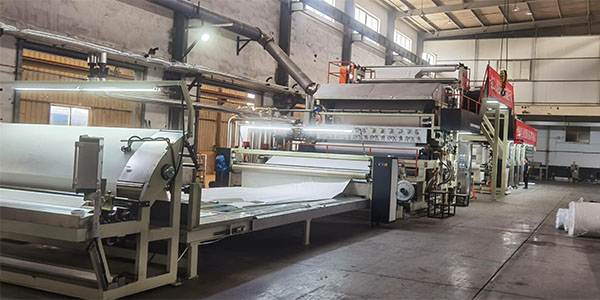
The equipment is equipped with a precision closed-loop tension control system (tension control accuracy ±0.5% FS) and a segmented independent temperature control mechanism (temperature control accuracy ±1°C), which can stably adapt to PVC substrates with a thickness range of 6.5–100μm and composite with various materials:
Film materials: PVC/PET, PVC/BOPP, PVC/PE, PVC/VMPET composite, suitable for high-barrier food packaging, cosmetic soft bags;
Metal materials: PVC/aluminum foil composite, used for pharmaceutical blister packaging, industrial anti-static packaging;
Paper materials: PVC/kraft paper, PVC/art paper composite, applied to gift packaging, label stickers and disposable food containers.
The material switching time is shortened to 5–8 minutes through the automatic parameter memory function, and the production line can quickly switch between 8+ material systems, fully meeting the flexible production needs of multi-specification products.
Multi-Process Compatibility: Integrated Lamination and Functional Expansion
It supports two-layer, three-layer and even multi-layer composite lamination, and can switch between dry lamination, solvent-free lamination and thermal lamination processes according to product requirements. The maximum line speed reaches 60m/min, and the gluing amount is accurately controlled at 1–5g/㎡ with an error of ≤±1%. Meanwhile, the equipment reserves standardized communication interfaces, which can realize high-precision synchronous linkage with Brushing Machine, Gravure And Emboss system and Coating Machine, forming a "pre-treatment-lamination-printing-embossing-coating" one-step production line.
Synergistic Effect with Supporting Equipment: Building an Integrated Production System
The full release of the PVC laminating machine's versatility depends on the seamless linkage with key supporting equipment, which jointly improves product quality, added value and production efficiency.
3.1 Pre-Treatment Synergy: Brushing Machine — Foundation for High-Quality Lamination
Before lamination, the Brushing Machine performs online static removal, dust cleaning and micro-level smoothing on PVC and composite substrates. Equipped with high-density anti-static brush rollers and negative pressure dust collection system, it can remove surface impurities, burrs and static electricity under controllable pressure (0–50MPa), avoiding defects such as poor adhesion and local bubbles caused by substrate contamination. Actual production data shows that after brushing pre-treatment, the lamination bonding fastness is increased by 35%, and the surface defect rate is reduced from 7.2% to 0.9%, laying a solid foundation for stable lamination.
Decoration Synergy: Gravure And Emboss — Enhancing Product Added Value
The PVC laminating machine is seamlessly connected with the Gravure And Emboss integrated system to realize synchronous lamination, high-precision gravure printing and three-dimensional embossing. The speed synchronization error between the two is ≤0.1m/min, and the pattern registration accuracy reaches ±0.03mm, completely eliminating misalignment between printed patterns and embossed textures. This synergy enables PVC flexible packaging to achieve high-definition pattern printing (up to 175lpi printing accuracy) and three-dimensional texture effects (frosted, relief, wood grain, etc.), increasing the product added value by 30%–40%. It is widely used in high-end gift packaging, cosmetic outer packaging and branded food bags, meeting consumers' demand for aesthetic and tactile packaging.
Conclusion and Industry Outlook
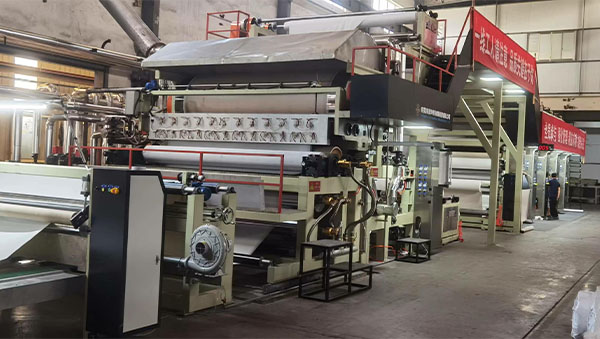
The new PVC laminating machine for flexible packaging, with its outstanding versatility in multi-material adaptation, multi-process compatibility and multi-scenario application, combined with the synergistic effect of Gravure And Emboss, Brushing Machine and Coating Machine, effectively solves the core pain points of traditional PVC flexible packaging production such as single function, unstable quality and high cost. Verified by production data and practical cases, this equipment significantly improves production efficiency, product quality and enterprise economic benefits, and meets the development needs of the flexible packaging industry towards diversification, high-end and greenization.
In the future, with the deep integration of intelligent technologies such as AI, Internet of Things and digital twin, the versatility of PVC laminating machines will be further enhanced—realizing automatic parameter matching for new materials, remote fault diagnosis and full-process quality traceability, and developing towards more intelligent, flexible and energy-saving directions. Meanwhile, the collaborative optimization of supporting equipment will promote the formation of a more efficient and integrated PVC flexible packaging production ecosystem, providing a solid technical foundation for the sustainable development of the global flexible packaging industry and helping related enterprises enhance core competitiveness in the international market.